
Why Your Bathroom Tiles Make or Break the Whole Design (And How to Get Them Right)

Tiles are one of the first things people think about when planning a new bathroom. Yet for all the time spent browsing collections and falling in love with a particular stone or pattern, the decisions that actually shape the finished room are often left too late or skipped altogether.
Bathroom tile choice goes well beyond picking something you love the look of. Get the scale wrong and even a beautiful bathroom can feel cramped. Choose grout without giving it proper thought, and you can either lose the tile you’ve chosen entirely or create a maintenance headache that takes the shine off the whole room. Here’s how to approach each decision with confidence.
How to Choose the Right Tile Size for Your Bathroom
One of the most counterintuitive lessons in bathroom design is that larger tiles can actually make a smaller space feel bigger. Because large-format tiles produce fewer grout lines, the eye travels more smoothly across the surface without interruption, which gives the impression of a more open, unbroken plane. In a compact ensuite, that effect can be genuinely transformative.
That said, scale needs to be considered in relation to the specific room. Think about the dimensions, ceiling height, and natural light you’re working with before settling on a format.
Orientation adds another layer of possibility. Rectangular tiles laid vertically draw the eye upward, which works beautifully in bathrooms with lower ceilings. The same tile laid horizontally across a narrower room can make the space feel wider. These aren’t tricks so much as tools that a good designer will reach for instinctively, steering the room toward the proportions you want it to have.
Getting Your Grout Colour Right
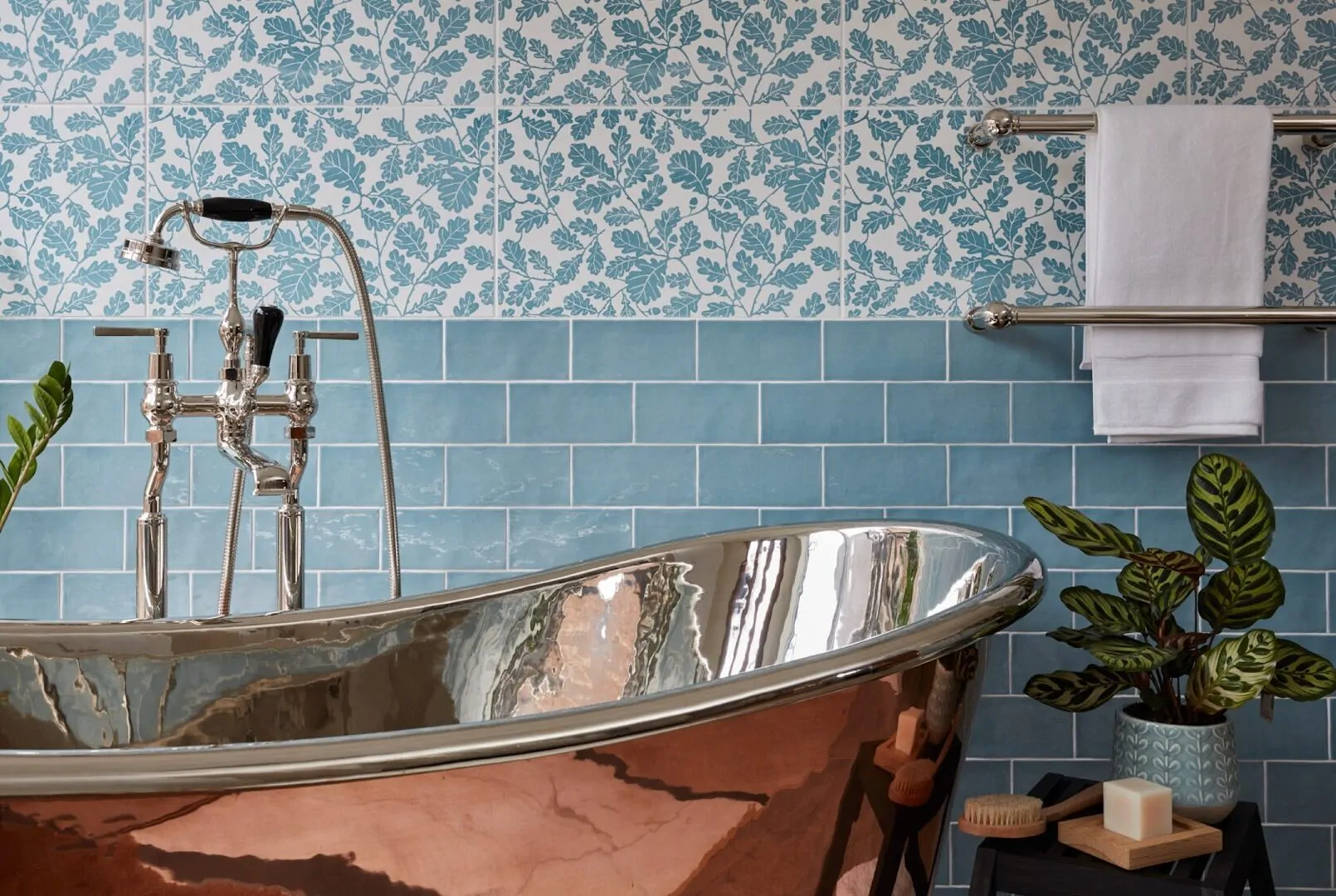
Grout is one of those decisions that people leave to the very end, often treating it as an afterthought. In practice, it has an outsized influence on how the finished room looks. Get it right and your tiles sing. Get it wrong and you can inadvertently work against the very material you spent so long choosing.
The key question is whether you want the grout to disappear into your tile, or to become a visible part of the design. Matching grout to your tile colour creates a seamless, spa-like surface that lets the material itself do the talking, which is particularly effective with natural stone or large-format porcelain. Contrasting grout makes every tile individually visible, turning the grid into a deliberate graphic element. Dark grout against light tiles creates something bold and architectural; light grout against dark tiles reads as clean and defined.
There are practical considerations too. White grout in a shower area will typically discolour over time without high-performance or epoxy grout. Mid-toned grouts in warm grey or stone are often the most forgiving for everyday maintenance without compromising on the look you’re after.
Feature Wall or Full-Room Coverage: Which is Right for Your Space?
Whether to tile every wall or focus on specific areas is a question worth approaching deliberately rather than by habit. Fully tiled rooms create a clean, cohesive look that suits wet rooms and spa-style bathrooms particularly well. Consistent wall finishes complete the overall aesthetic and make the space far easier to maintain in high-moisture areas.
A well-considered feature wall, on the other hand, gives you the opportunity to use a more expressive or premium tile in a focused way while keeping the rest of the room quieter. This approach works beautifully when you want to draw attention to a particular element: the shower zone, the wall behind a freestanding bath, or the vanity area. The key is making that choice with intention, so the result feels considered rather than accidental.
How to Mix Tile Materials Without Losing Cohesion
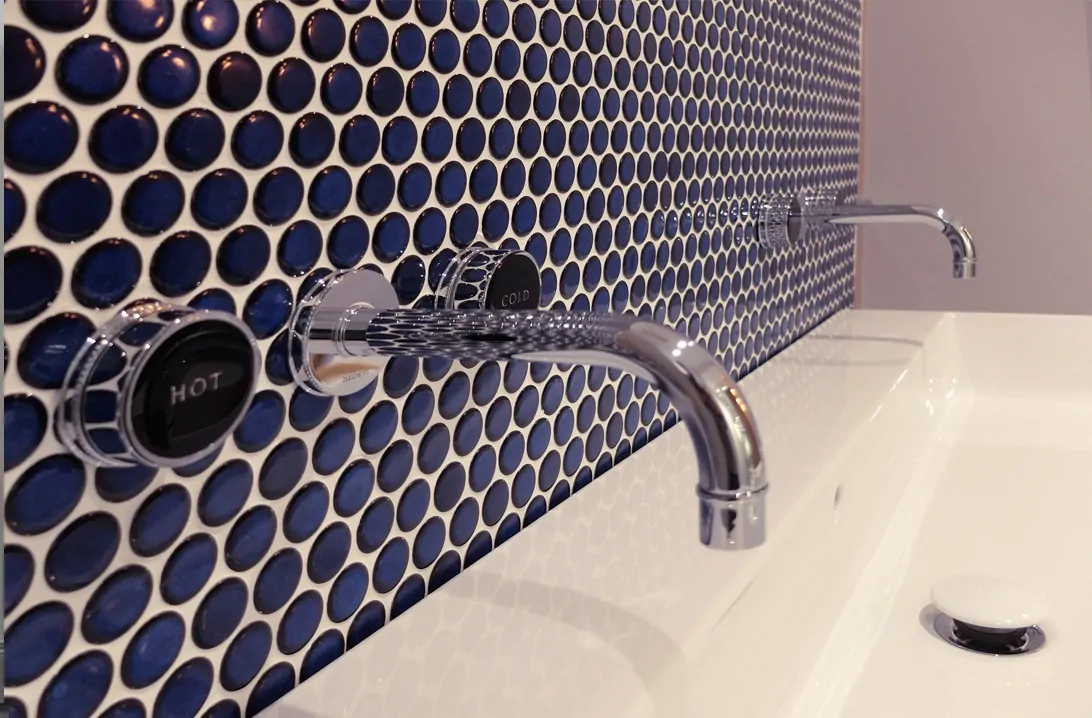
Using more than one tile material in the same bathroom, when handled well, adds real depth and personality to a design. Natural stone, porcelain, and terrazzo each have their own character, and combining them thoughtfully can create a layered, luxurious result that a single material simply can’t achieve on its own.
The principle to hold onto is hierarchy. Identify one tile as the hero of the space, perhaps a richly veined natural stone behind the bath or a distinctive terrazzo on the floor, and let the other materials support it rather than compete with it. Keeping a consistent tonal range across different surfaces is what holds a mixed scheme together and stops it from feeling busy.
Ca’ Pietra, one of the specialist tile brands we work with at Village Bathrooms, produces collections that sit thoughtfully across natural stone, porcelain, and terrazzo, designed with exactly this kind of layered approach in mind.
Start With the Room, Not the Tile
The most common mistake in bathroom tiling isn’t choosing the wrong material. It’s choosing the right material for the wrong room. A tile that looks extraordinary in a showroom or on a mood board needs to work in the context of your actual space: its proportions, its light, the fixtures you’re pairing it with, and the style you want to live in every day.
Whether you’re drawn to a minimalist scheme in cool stone and muted grout, a warm traditional bathroom with richly patterned encaustic floors, or something bold and contemporary with dramatic dark tiles and brass detailing, getting the tile decisions right starts with a clear picture of the whole room.
That’s where our bespoke design service makes a real difference. Using 4D visualisation technology, we can show you exactly how your chosen tiles will look in your bathroom before a single one is laid. We’ll also help you think through storage and cabinetry so every element of the finished room works together. If you’d like to explore options in person, you’re very welcome to visit our showroom in Uckfield, where our fully dressed bathroom settings bring all of these decisions to life.